Smart Meters, Smarter Questions: Why Zimbabwe Should Rethink the Tech-Driven Water Agenda?

As Nairobi’s water utility Chief publicly rejects smart water meters for being economically unviable and socially misaligned, Zimbabwe is doubling on their nationwide rollout. This divergence raises urgent questions: Why is Zimbabwe embracing a model that experts in Kenya, who have lived its consequences, are now resisting? And what does this tell us about the…
Read More

Zimbabwe’s New 2025 Gender Policy Repositions Water Access and Equity

In a critical and long-overdue move, the new Zimbabwe National Gender Policy 2025 has placed water access at the heart of gender-responsive climate action. Policy Pillar 3.8, which seeks to “strengthen gender-responsive climate action and resilience,” explicitly calls for upscaling funding toward the rehabilitation and expansion of water, sanitation, and hygiene (WASH) infrastructure particularly in…

Read More

FACT CHECK: Tokwe Mukosi Dam WAS NOT Constructed by the Zimbabwe Second Republic

On the 15th of July 2025 Zimbabwe’s Senator Mavenyengwa presented a Motion in Parliament calling for unity in support of the national agenda. In the presentation of the motion, the Senator made this erroneous statement:“In the face of climate change and its unpredictable weather patterns, the construction of dams, such as the Tugwi Mukosi Dam,…

Read More

“Bulawayo must introduce Smart Water Metering by 30 June 2025” – Parliament of Zimbabwe

The Zimbabwe Senate has recommended that “Bulawayo City Council must introduce smart water metering for accurate billing as well as curbing non-revenue water losses” by 30 June 2025. This recommendation is contained in the Senate Hansard of 10 June 2025 where the Report Of The Joint Portfolio Committee On Local Government, Public Works And National…

Read More

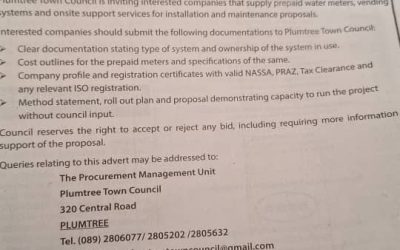
Plumtree Town Calls for Prepaid Water Meters Installation

Plumtree Town Council has invited bids from service providers for the supply, installation, and maintenance of prepaid water meters and vending systems, marking its official step toward digitizing municipal water access. While officials argue the system will reduce water losses, enhance billing accuracy, and improve service delivery, civil society groups and human rights experts are…

Read More

MPs Question Safeguards for Low-Income Citizens as Water Privatization Looms

Lawmakers voiced caution on Wednesday as the Government defended plans to transfer water supply duties to private providers in urban areas. Hon. Makumire cited international cases, including Bolivia and France, where privatization led to improved delivery—but also to profit-driven models that risk excluding poor communities. “What measures have been put in place to ensure low-income…

Read More

Government Endorses Water Privatization Amid Efficiency Concerns

A heated debate unfolded in Parliament this week over the potential privatization of urban water provision, with the Government declaring that private sector involvement could improve efficiency and service delivery. Justice and Parliamentary Affairs Minister Hon. Ziyambi Ziyambi stated that local authorities have “dismally failed” to deliver clean and safe water, prompting a shift toward…

Read More

Civil Society Calls for Water Rights in Electoral Planning

Civic groups are urging Parliament and ZEC to enshrine water and sanitation standards into Zimbabwe’s electoral law. Drawing from their by-election findings, MIHR is advocating for the amendment of the Electoral Act to include rights-based benchmarks for water and sanitation in polling stations. Recommendations include: sex-separated toilets, minimum potable water per official, handwashing stations, and…

Read More